From experiment to instrument: What changes when you engineer a scientific workflow?
Turning a laboratory experiment into a scientific instrument means more than recreating the core science in hardware. It requires understanding how the user actually works, identifying what needs to be controlled or measured, and engineering the workflow so the process can be run consistently, reliably and with fewer unnecessary steps.
A laboratory experiment is more than a protocol. It also includes the way a scientist prepares the setup, introduces samples, adjusts conditions, interprets what they see and responds when something changes.
When that experiment becomes the basis of a scientific instrument, these interactions matter.
Instrument development is therefore not simply about reproducing the core science with hardware. It is about understanding the complete experimental workflow and deciding what the system needs to control, measure or simplify so that the process can be performed consistently.
1. Start with the user and workflow
Before designing an instrument, understand how the experiment is actually performed.
A written protocol may describe the major steps, but an experienced scientist often makes many smaller decisions along the way: adjusting a setting, checking whether a sample is behaving normally, repositioning a component or deciding when the system is ready for the next step.
Some of these actions are simply convenient ways of working. Others directly affect the scientific result.
Mapping the workflow helps separate the two.
Useful questions include:
- What does the user need to do before the experiment starts?
- How are samples and reagents introduced?
- Which conditions influence the result?
- What does the user currently observe or adjust?
- Where do delays, repeated setup steps or errors occur?
- What determines whether the experiment has worked?
The goal is not to automate every manual action. It is to understand what the user is trying to achieve and which parts of the workflow need to become more defined.
This is particularly relevant in life science R&D, where laboratory protocols often depend heavily on manual manipulation and researcher judgement. [1]
2. Define what the system needs to control, measure and support
Once the workflow is understood, scientific needs can be translated into engineering requirements.
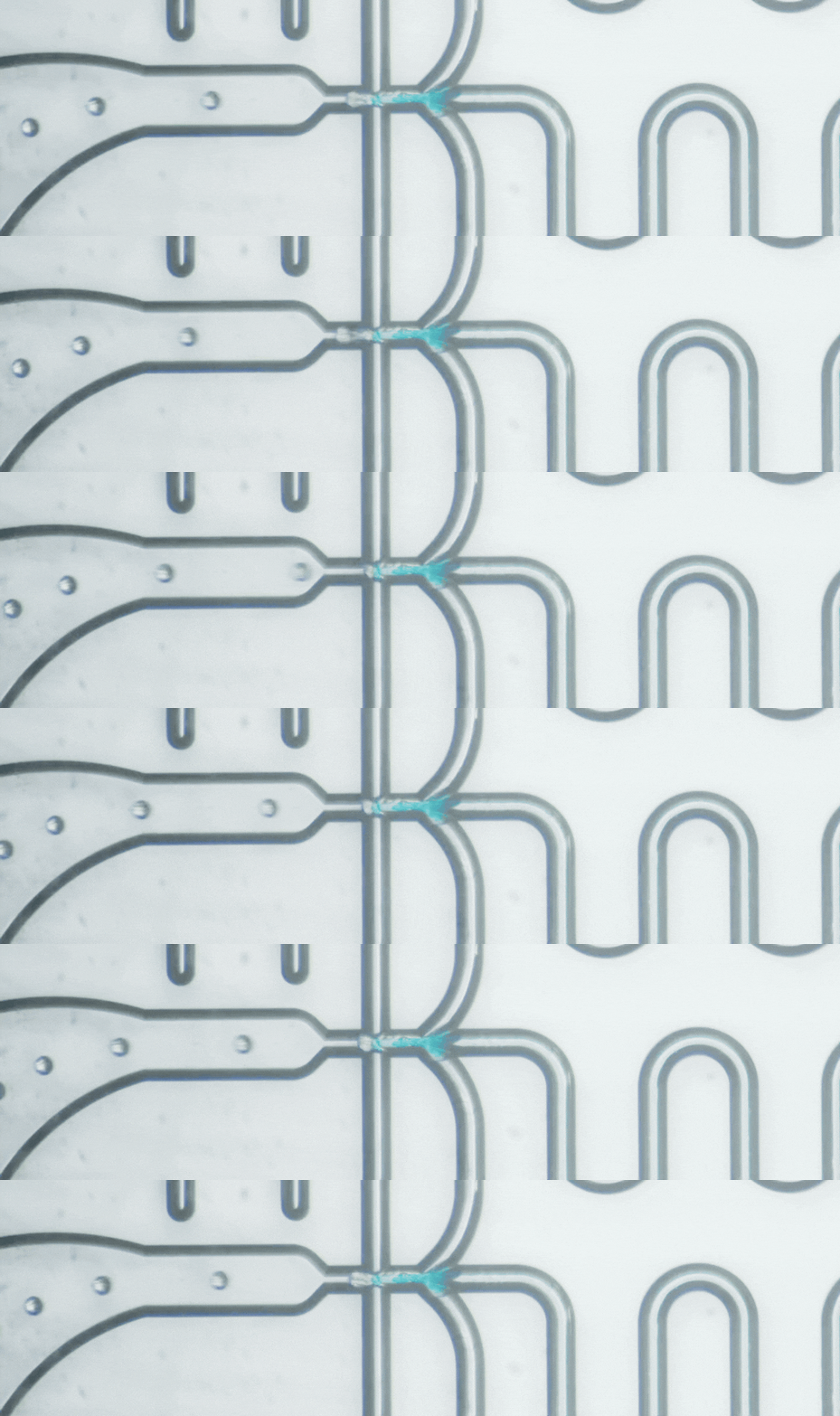
Consider a microfluidic experiment in which a scientist adjusts pressure while observing droplet formation.
The engineering questions are not simply which pressure controller or pump to use. First, we need to understand what matters to the experiment.
- What indicates that droplet generation is stable?
- How much variation is acceptable?
- Which parameters need to be controlled?
- Does the user need to see the process directly?
- How quickly should the system respond when conditions change?
The answers determine what the instrument actually needs.
The same reasoning applies beyond microfluidics. A manual pipetting step may create requirements around volume and accuracy. Visual inspection may create an imaging requirement. A temperature-sensitive reaction may require heating, sensing and control. A decision currently made by an experienced scientist may need either a measurable threshold or a clear way for the user to make that decision within the instrument.
This is where science and engineering need to stay closely connected.
Engineering requirements should come from what the experiment and the user require, rather than from the capabilities of the components available. The aim is not to reproduce every manual action in hardware, but to preserve the conditions and decisions that matter to the science while simplifying the workflow where possible.
3. Engineer the complete workflow, not just the core technology
Once the core scientific process works, there is still a practical question:
How will the user actually run it?
For a microfluidic system, a working chip design is only part of the workflow. Samples still need to enter the chip, the chip needs to connect reliably to the fluid-delivery system, and the user may need to change chips, formulations or experimental conditions.
These interfaces can become significant parts of the instrument design.
We encountered this in our own microfluidic particle-development workflow.
The droplet-generation process already worked, but changing experiments involved tubing, reservoirs, chip holders and alignment components. Researchers had to disconnect and rebuild parts of the setup, with a new configuration sometimes taking close to an hour to prepare.
Rather than changing the underlying droplet science, we redesigned the workflow around it.
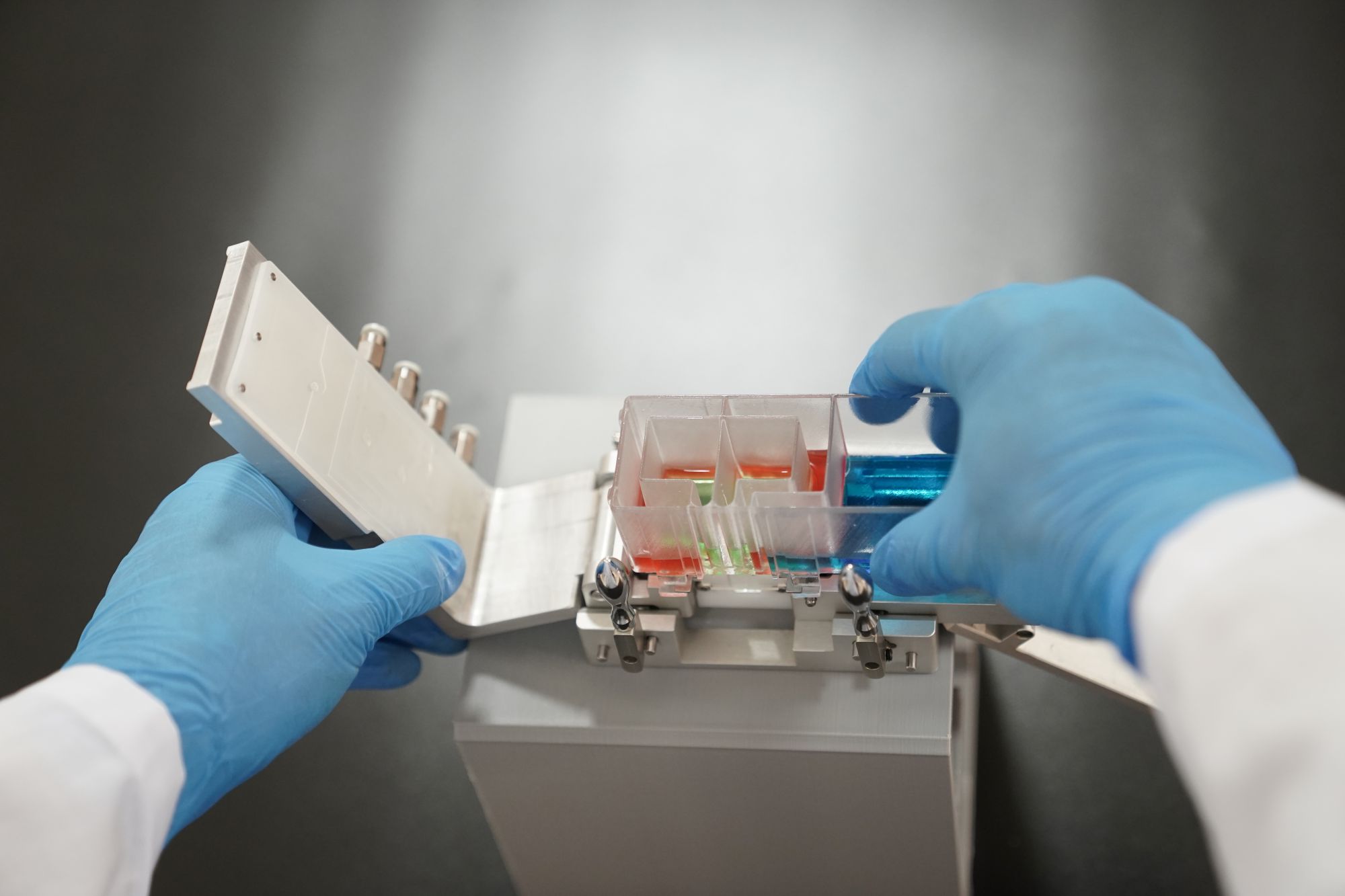
The resulting modular tubeless platform combines a plastic cartridge, precision glass chip and mechanical clip. The cartridge acts as both the fluid reservoir and chip holder, allowing reagents to be added directly without tubing or priming at the immediate chip interface. Chip and formulation changes that previously took close to an hour could then be completed in minutes. [2]
The improvement came from looking beyond the chip itself and considering how the user interacted with the complete experiment.
This is an important part of instrument engineering. A better system does not always require more technology. Sometimes it requires fewer connections, fewer setup steps or a simpler interface between the scientific process and the user.
4. Test the instrument in the way it will actually be used
Once the workflow has been engineered into a system, testing needs to return to the original scientific question.
Does the instrument still create the conditions the experiment requires?
Individual components may all meet their specifications while behaving differently when connected together. Fluidic resistance changes when tubing and chips are added. Mechanical assembly can affect alignment. Sensors and actuators interact. Software determines when different operations occur.
Testing therefore needs to progress from individual components to the complete workflow.
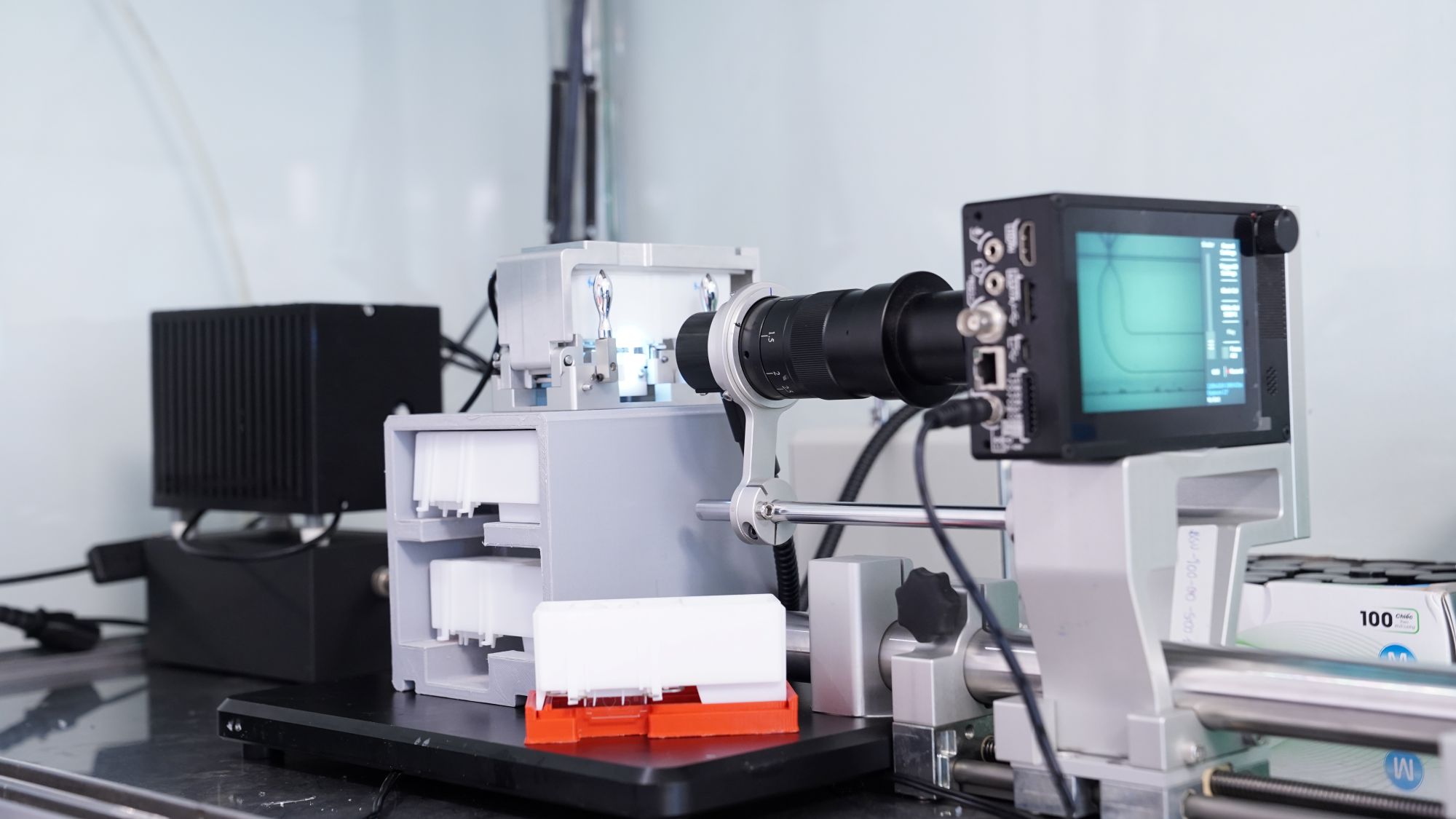
Our embedded pressure-control platform provides one example. Individual control Nodes were developed to regulate pressure locally, but development also included stability testing, response-time characterisation and multi-channel synchronisation under connected operating conditions.
The objective was not simply to demonstrate that the pressure-control hardware worked. It was to understand how it behaved as part of a microfluidic system.
The same principle applies to the instrument as a whole.
A laboratory experiment often works because the scientist running it understands both the written procedure and the small decisions needed to keep it on track. Engineering that workflow into an instrument means identifying which of those conditions and interactions matter, designing the system around them, and then testing whether the resulting workflow still delivers the intended science.
At Blacksheep Sciences, our scientists and engineers work together to understand experimental processes before developing the fluidics, hardware, controls and interfaces around them. If you're exploring how to translate a laboratory workflow into a scientific instrument, talk to our team
References
[1] Holland I and Davies JA (2020) Automation in the Life Science Research Laboratory. Front. Bioeng. Biotechnol. 8:571777. doi: 10.3389/fbioe.2020.571777
[2] Blacksheep Sciences. “Modular tubeless microfluidic system for faster lab experimentation.” 2025.
.png)