
Calculator - Microfluidic Resistance
This calculator estimates microfluidic resistance from channel geometry and fluid viscosity. It supports circular and rectangular channel profiles and can help with early-stage pressure-flow planning, pump selection and microfluidic system design.
About this calculator
Use this calculator to estimate microfluidic resistance, also known as hydraulic or flow resistance, from channel geometry and fluid viscosity.
Microfluidic resistance describes how much pressure is required to drive a given volumetric flow rate through a channel. In this sense, it is similar to electrical resistance: higher resistance requires a greater pressure drop to achieve the same flow rate.
Microfluidic Resistance Calculator
Microfluidic resistance characterizes a fluidic system and is independent of flow rate. It represents the pressure difference required to move a unit volume of liquid per unit time between two points in a channel.
Start by selecting your channel type. A corresponding input menu will appear.
Input your values and press "Calculate" to get your results.
After calculation, you can change any of the input fields and press "Calculate" again to generate updated results.
Alternatively, you can use "Clear All" to get rid of all inputs and outputs.
Channel profile
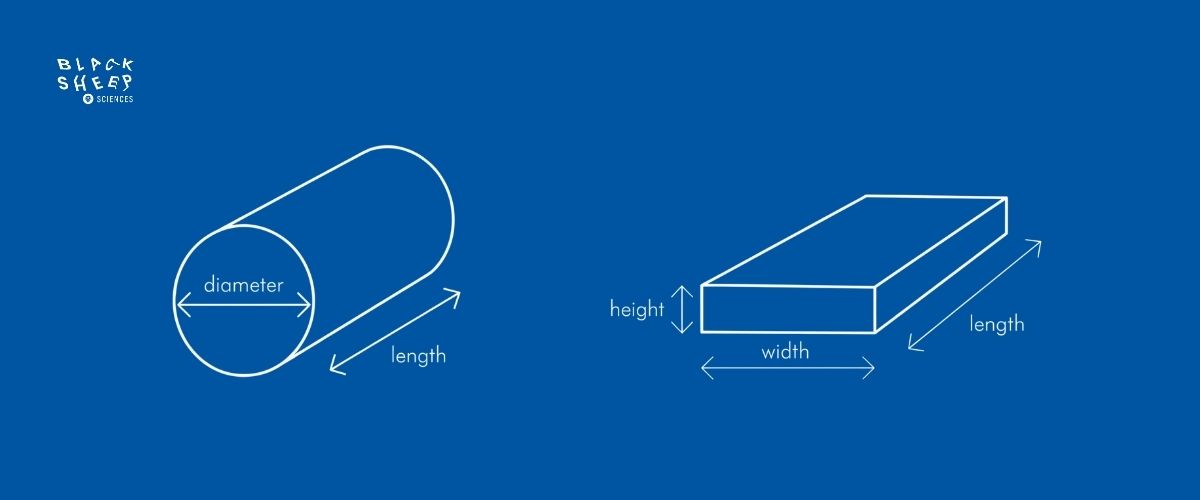
The calculator supports circular and rectangular channel profiles.
Use the circular option for capillaries, tubing, needles and round glass channels. Use the rectangular option for PDMS chips, injection moulded polymer devices, milled channels and many lab-on-a-chip systems.
Choosing the correct profile matters because channel shape affects hydraulic resistance and therefore the pressure-flow relationship used in the calculation.
When to use it
This calculator can support early-stage pressure-flow planning, pump or pressure controller selection, and comparison of simple channel designs.
For more complex microfluidic networks, resistance calculations can also help estimate cumulative pressure drop across channels in series or understand how flow may divide through parallel paths.
Actual system performance may also be affected by manufacturing tolerances, fittings, surface properties, bubbles, channel deformation and fluid behaviour.
Sources:
- Bruus, H. (2014) Microscale Acoustofluidics. Royal Society of Chemistry. Accessed from https://books.rsc.org/books/edited-volume/1076/chapter/901085/Governing-Equations-in-Microfluidics
We would love to hear from you! How was your experience with this tool? If you have any feedback on functionality/ UI or would like to request a new calculator feature, please fill in this form to help us improve!
.png)
.gif)