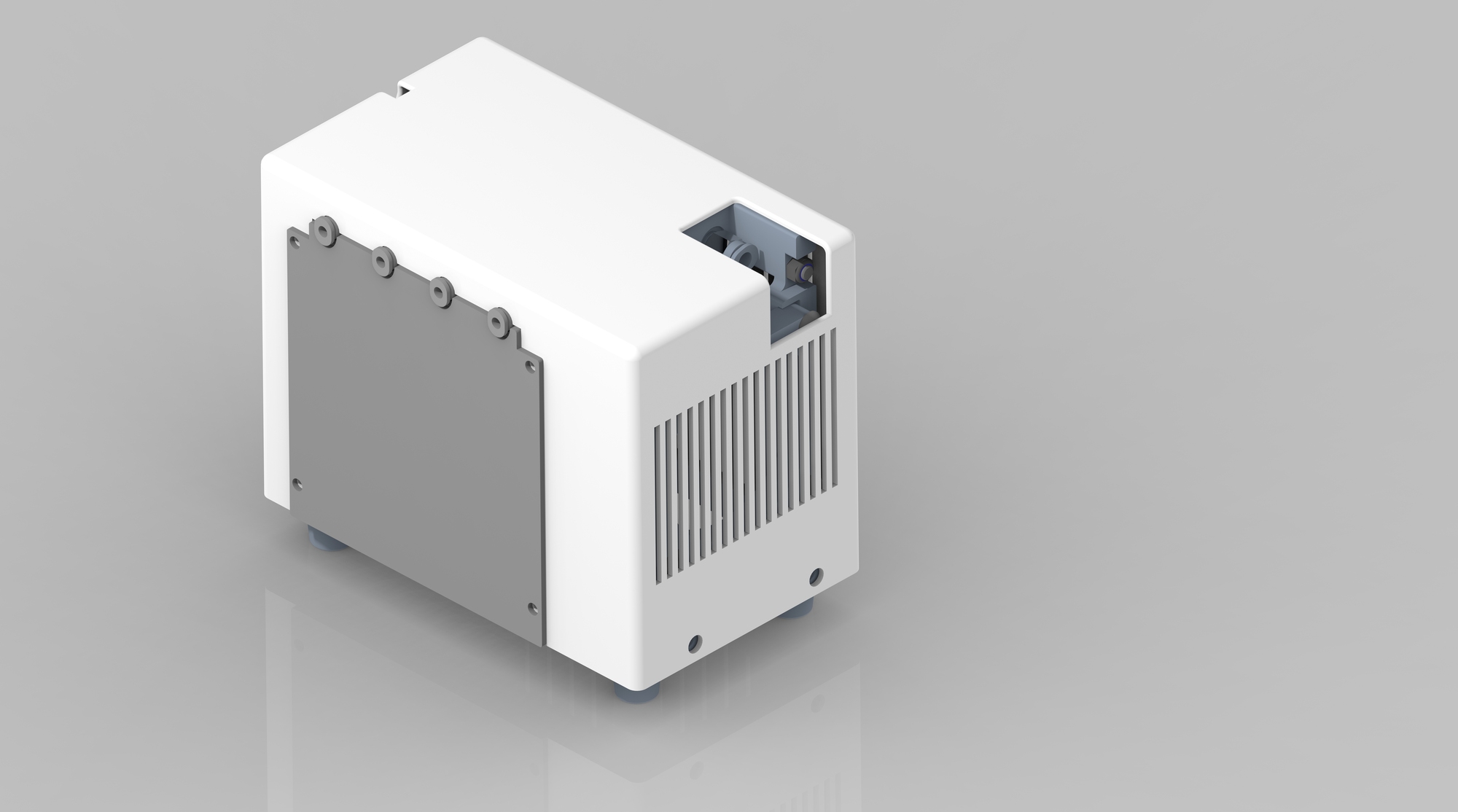
Case study: Engineering a scalable, embedded pressure-control platform for microfluidics
How we designed pressure control for modern microfluidic platforms through a modular, embedded-ready architecture. Engineering that enables science!
1. Problem
Most microfluidic pressure controllers on the market are standalone laboratory units with fixed configurations. They offer strong performance, but they can be difficult to scale beyond a few channels, and hard to embed within standalone platforms.
For researchers working with multi-channel microfluidics or compact instrument formats, these constraints introduce unnecessary complexity: more devices, more tubing, more wiring and more setup time.
As experiments become more parallelised and instrument footprints shrink, traditional controllers struggle to keep up. Researchers need stable, responsive pressure control that is designed to integrate within their system, rather than operate as a disconnected external component.
2. Solution
Our engineering team developed a modular embedded pressure-control platform designed specifically for integration into scientific instruments and advanced microfluidic setups.
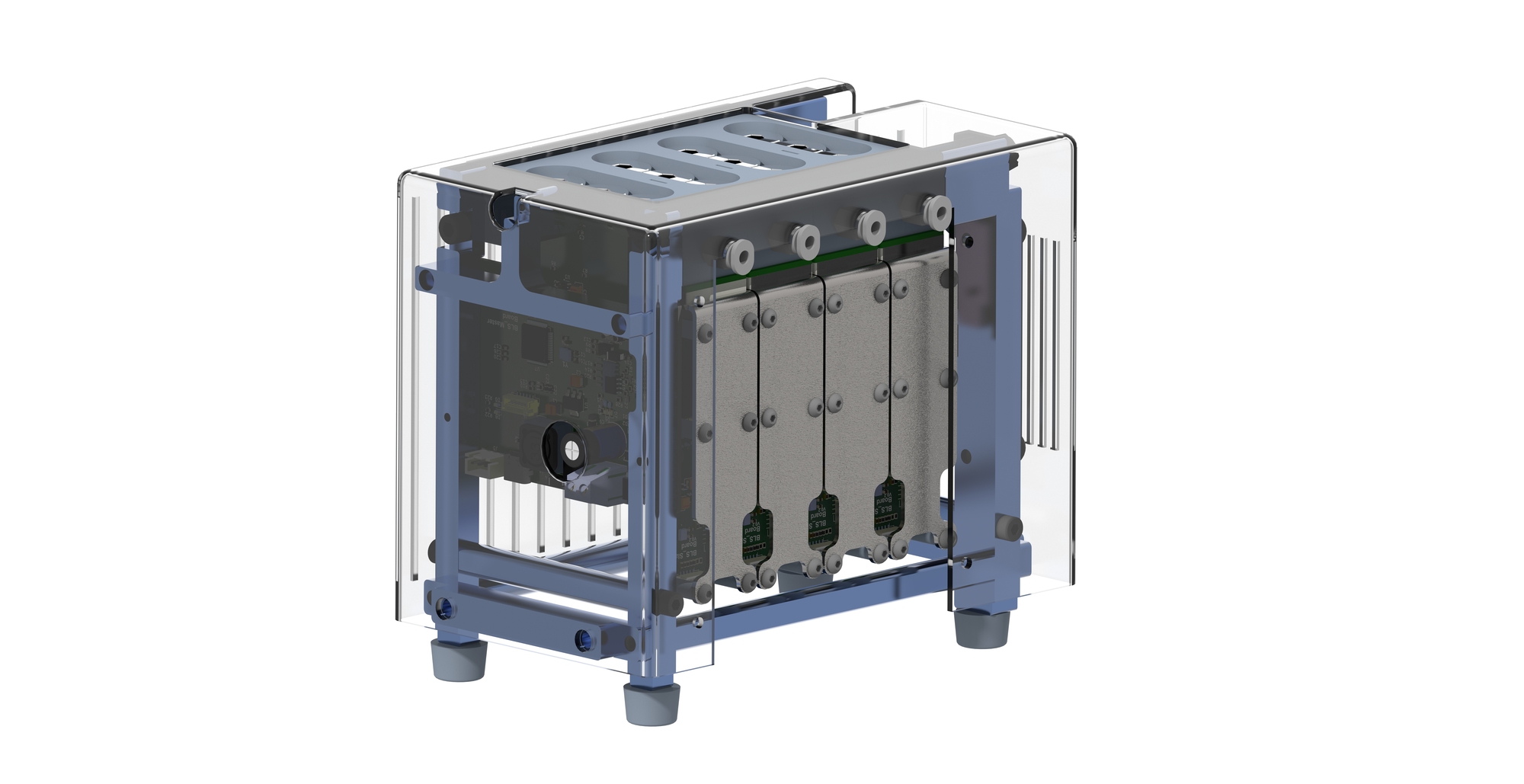
The platform uses a Master + Node architecture. The Master manages communication, while each Node handles high-speed closed-loop pressure regulation locally. Nodes connect through a daisy-chain, allowing researchers to scale from a single channel upto 16 channels with a single point of control and no need to redesign the system architecture.
Despite its compact size, each Node delivers stable, predictable pressure behaviour across a wide range of volumes. An adaptive control algorithm automatically tunes itself to the system, removing the need for manual calibration or constant adjustment.
Instead of relying on a monolithic external controller, researchers now can gain a precise, plug-in module that fits directly into their instrument.
**: Market reference values reflect commonly published specifications for commercial microfluidic pressure controllers. They are provided to contextualise system-level design, not as a specific comparison.
3. How we built it
3.1. Plan and define
We analysed the bottlenecks of existing laboratory controllers: their size, fixed outputs, wiring complexity and limited scalability. This highlighted a clear need for a pressure-control solution designed from the start for embedded use.
3.2. Design and prototype
We built a distributed architecture where each Node controls pressure at high speed, while the Master coordinates the system. Mechanical, electrical and communication interfaces were designed to be simple, compact and easy to integrate.

3.3. Test and refine
Through stability testing, response-time characterisation and multi-channel synchronisation trials, the system was refined for reproducibility and predictability. Continuous in-lab use helped validate the adaptive algorithm and ensure reliable performance across different experimental conditions.
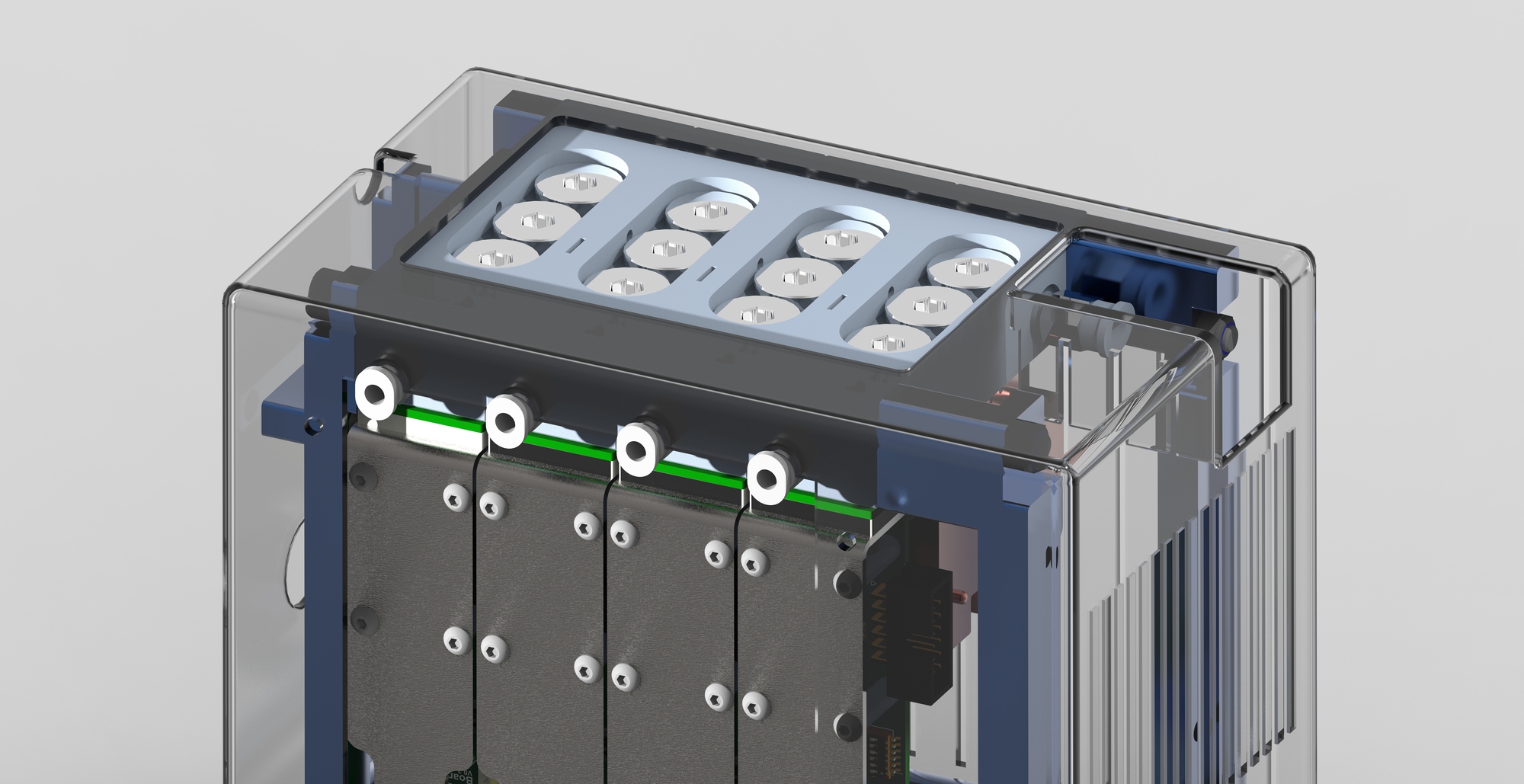
The final platform delivers laboratory-grade pressure control in a footprint small enough to embed inside modern instruments
4. Impact
Rethinking howpressure control fits into modern microfluidics
Microfluidic systems are increasingly compact, automated and parallelised. Yet flow control is still typically handled by standalone external units. This mismatch limits what instruments can become.
By embedding pressure control at the module level, instruments gain precision without sacrificing size, enabling workflows that would be impractical with external controllers.
Handling variability where it matters
Microfluidic channels, chips and connected volumes vary widely across instruments and experiments. Traditional controllers often require tuning or manual calibration to maintain stability across these differences.
The platform’s adaptive control algorithm automatically compensates for changes in system volume and dynamics.
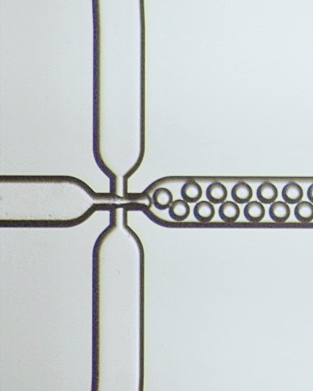
This allows stable behaviour even in edge cases, a significant advantage for droplet generation, sensitive assays or any workflow where small fluctuations have outsized effects.
Scaling channels without scaling complexity
Benchtop controllers typically offer 1–4 outputs. Scaling means buying more devices, adding more tubing, and managing more interfaces.
By using a daisy-chained architecture, additional channels can be added simply by plugging in another Node. The current system supports up to 16 pumps, limited by the PSU and current line, while the architecture itself is designed to scale further.
For researchers exploring large parameter spaces or parallel experiments, this removes a major bottleneck.
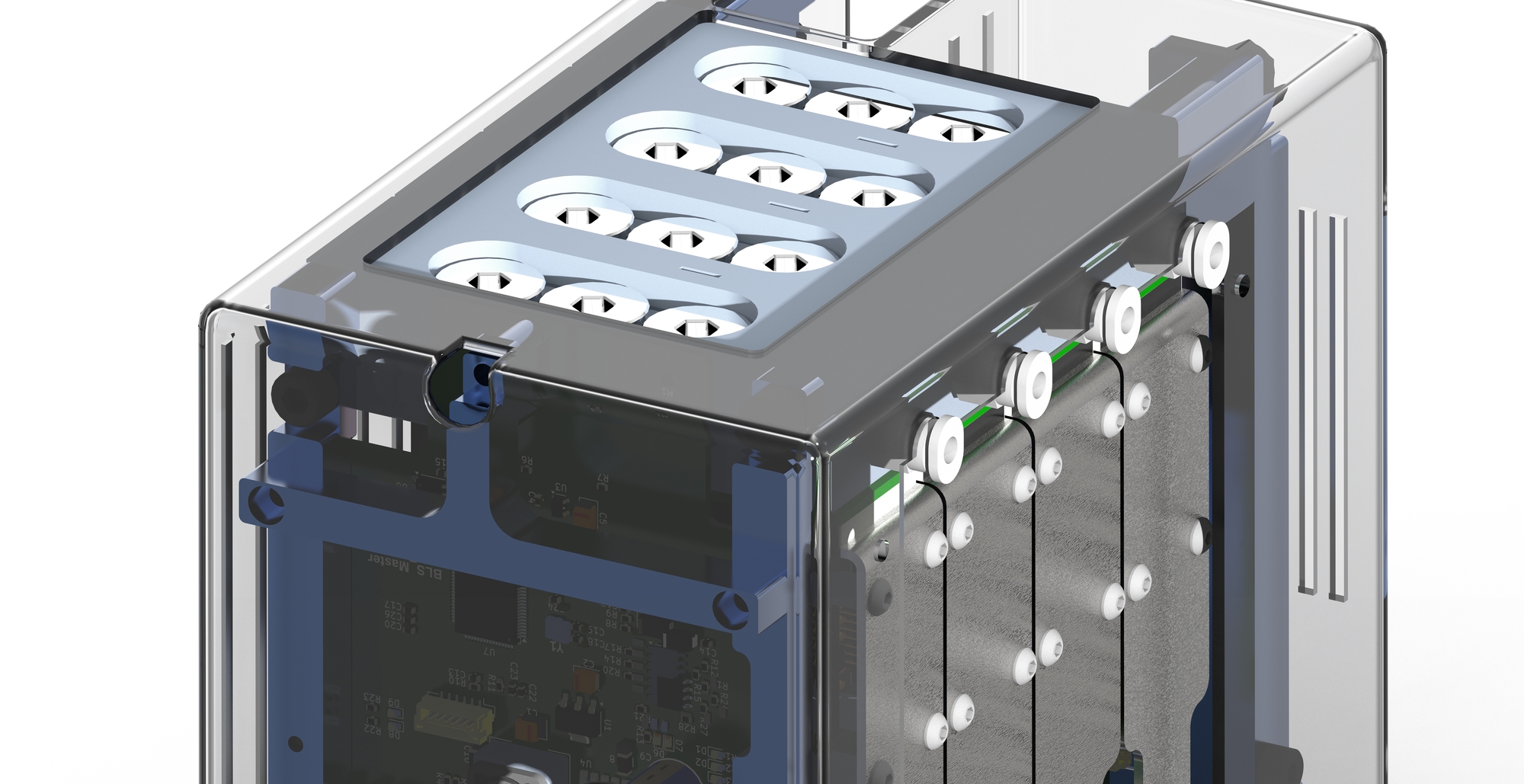
Designed for real integration, not as an accessory
Where most controllers assume they will sit on a bench, this platform assumes it will live inside a product.
Mechanical mounting, pneumatic integration and electrical interfaces were simplified until they could be added with minimal redesign.
The result is not a tool attached to an instrument, but a building block within it.
Enabling cleaner experimental environments
By reducing the number of cables, devices, and potential points of failure, we simplify the setup. This makes the system more stable, easier to repeat, and simpler to maintain.
This isn't just about looking neat; it also helps eliminate unwanted errors, improves how the system responds, and makes experiments more consistent and reliable.
In simpler terms, the goal is to make the testing process more organized and efficient, which in turn improves the accuracy and repeatability of the results.
Opening possibilities for the next wave of microfluidic instruments
As instruments become more compact and application-specific, embedded pressure control becomes a core enabler.
From portable diagnostics to parallelised organ-on-chip platforms, the ability to build precise flow control directly into the device expands what is possible scientifically and commercially.
The platform provides a foundation for these emerging systems, a modular pressure “engine” that keeps performance high while letting the instrument evolve around it.

.gif)
Interested in exploring what embedded pressure control could enable?
We’d be glad to discuss your application.
Get in touch at https://www.blacksheepsciences.com/contact-us
.png)
.gif)